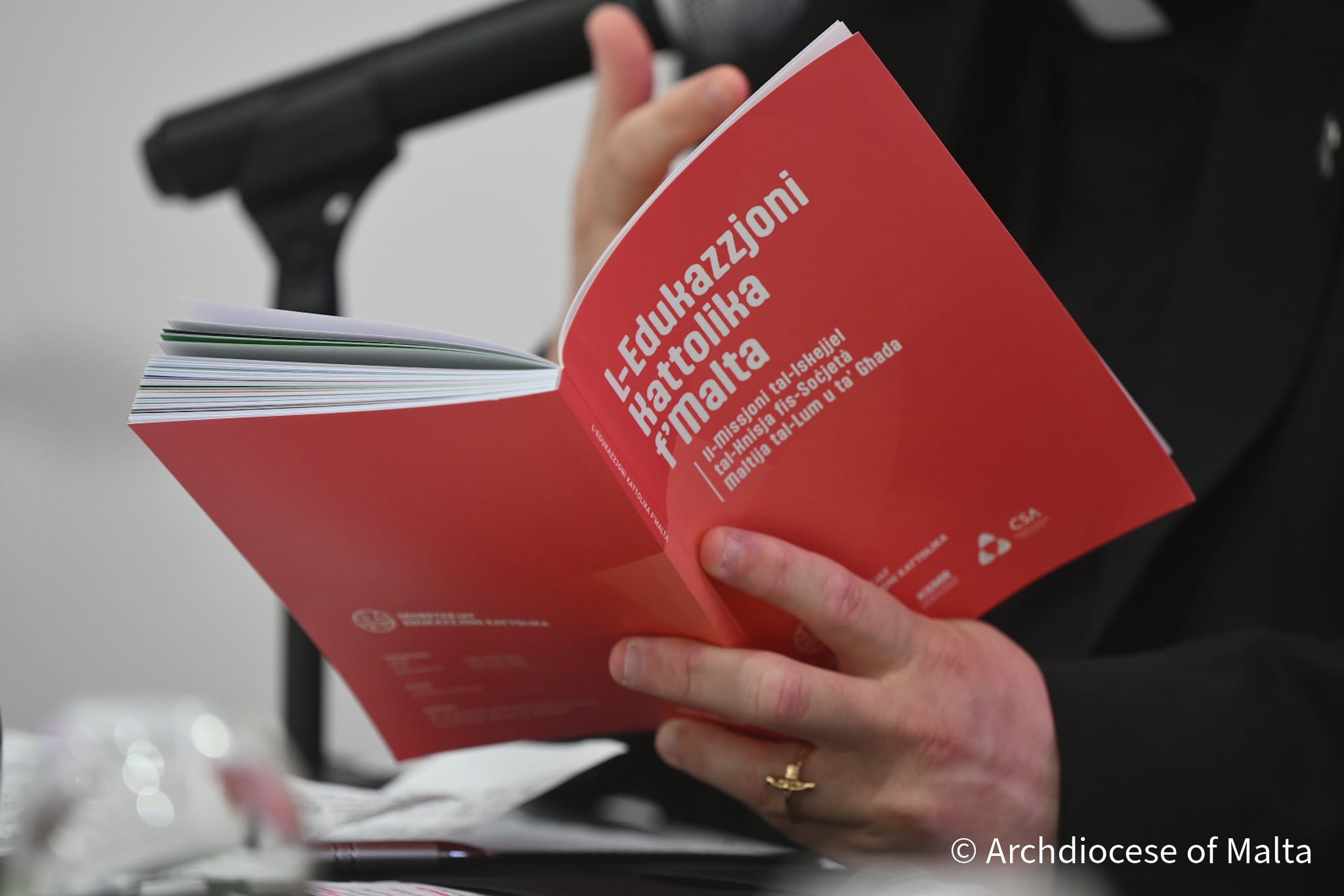




An identity document for Church Schools, which enters into dialogue with society’s continually evolving complexities, has been launched on Wednesday 13th May 2026 as a framework for the present and future formation of its communities, centred on the person of Christ and rooted in human dignity.
Titled ‘Catholic Education in Malta: The Mission of Church Schools in Maltese Society Today and Tomorrow’, the document outlines the mission and identity of Church Schools in Malta and Gozo as Christ‑centred communities, celebrating diversity while establishing the non‑negotiable principles that guide the mission of Catholic education.
Launched during the inauguration of the Secretariat for Catholic Education’s new offices within the Good Shepherd Complex in Balzan, the document will shape the Church Schools sector’s strategic planning, guide the working group responsible for implementing The Future of Church Schools initiative, and, together with heads of school, act as inspiration for school development in the coming years.


In his message to mark the occasion, Archbishop Charles Scicluna emphasised the crucial role of Church Schools in forming persons committed to those who are most vulnerable, guided by the values of dignity and justice and characterised by closeness, compassion and tenderness. He encouraged Heads of School and Senior Officials of the Secretariat to model their leadership on the image of Christ the Shepherd – through service and fidelity – to continue this important evangelical mission of the Church.
At the formation level, the document will strengthen programmes for leaders, educators and parents, while encouraging the language of the Gospel to be expressed through concrete actions that are visible to students.
In a message by Gozo Bishop Anton Teuma, the need for a continuous formation process for all those working in Catholic schools was highlighted, encompassing “formation in faith and the Christian experience. Church schools need educators who not only teach, but who, through their testimony, are capable of transmitting values, hope and a sense of life.”


Auxiliary Bishop Joseph Galea‑Curmi, who presided over the event, said that the process adopted in developing this document should act as a model for its implementation: rather than imposing, stakeholders should be engaged as active participants, so that each becomes a living beacon of the Gospel message, offering a dialogic approach respecting the inherent dignity of every person.
Rev. Dr Mark Ellul, Delegate for Catholic Education, explained that this document is an invitation to reflect on the ultimate aim for Church Schools to act as “translators” of Gospel values into daily practice – in classrooms, staffrooms and engagement with families – through care and dignity, and through a lived commitment to justice, inclusion and peace.