



Dear Chief Justice,
Members of the Judiciary,
Members of the legal profession,
Officials and employees of our Courts,
Dear brothers and sisters,
At the beginning of another Judicial Year, we come before God conscious of the weight and dignity of the task entrusted to the administration of justice.
We come not simply to ask God to bless another year of work. We come to place that work under His judgement. For before we judge, we too are judged: judged by the truth, judged by our conscience, judged by the demands of justice, and ultimately judged by the God who, as Scripture reminds us, “shows no partiality” (Rom 2:11).
In 1942, in the darkness of a world at war, Pope Pius XII addressed the Roman Rota with words which have lost none of their force: “Truth is the law of justice.”
Seventy years later, in 2012, reflecting on the quest for truth as a moral and legal duty, five principles were proposed, inspired by the teaching of Pope St John Paul II. Today, I would like to offer those five principles as a meditation and, perhaps, as five prayers for the year ahead.
First: justice is sometimes called truth.
The work of justice begins with a humble question: What is true? What really happened?
Before interpretation comes fact. Before judgment comes listening. Before sentencing comes the patient, sometimes exhausting, search for what is true.
The courtroom is one of the few places in society where we still solemnly ask a human being to tell “the truth, the whole truth, and nothing but the truth”. That formula is more than an evidential requirement. It expresses a profound human intuition: without truth, justice becomes impossible.
And, therefore, the enemy of justice is not only the lie. It is also the half-truth; the convenient silence; the fact deliberately hidden; the evidence carelessly ignored; the powerful voice allowed to drown out the weaker one.
In the original context of these five principles, a “culture of silence” was described as deadly because silence can become an ally of injustice.
The same warning has a wider application.
Justice requires the courage to allow the facts to speak – even when they are uncomfortable; even when they inconvenience the powerful; even when they contradict public opinion; and, equally, even when they contradict the accusation.
A judge does not owe his or her allegiance to the popular version of events. A lawyer does not serve justice by manipulating the truth. A witness does not own the facts. A jury does not discharge its duty by disregarding them. And the State does not own the truth.
Truth is not ours to manufacture. It is ours to seek.
Second: justice, because it participates in truth, speaks to the conscience.
There is something deeply personal about the administration of justice. Codes, precedents, procedures and evidence are indispensable. But ultimately a human being must listen, discern and decide.
This is why conscience matters. Not conscience understood as personal preference – “I feel this is right” – but conscience as that interior place where the human person allows himself or herself to be challenged by truth.
For those entrusted with justice, there is therefore an indispensable interior virtue: intellectual and moral humility.
I may be wrong. I may have misunderstood. My first impression may have deceived me. My experience may enlighten me, but it may also prejudice me. The person before me may be difficult, unsympathetic, powerful, poor, foreign, educated or uneducated – but none of these things changes the obligation I have towards the truth.
The prayer of a judge, of a magistrate, of a lawyer, of a juror, therefore, might be very simple:
Lord, give me a conscience that is free enough to recognise the truth when I encounter it, and courageous enough to obey it when I recognise it.
Third: respect for truth creates confidence in the rule of law; disrespect for truth creates distrust and suspicion.
This principle has a particular resonance in a small country where people, institutions and interests inevitably operate in close proximity – and personal, professional and political relationships frequently intersect. In such an environment, confidence that decisions are grounded in facts rather than connections, influence, corruption, prejudice or convenience is especially important.
Justice must be done; but society must also be able to trust that justice is being done.
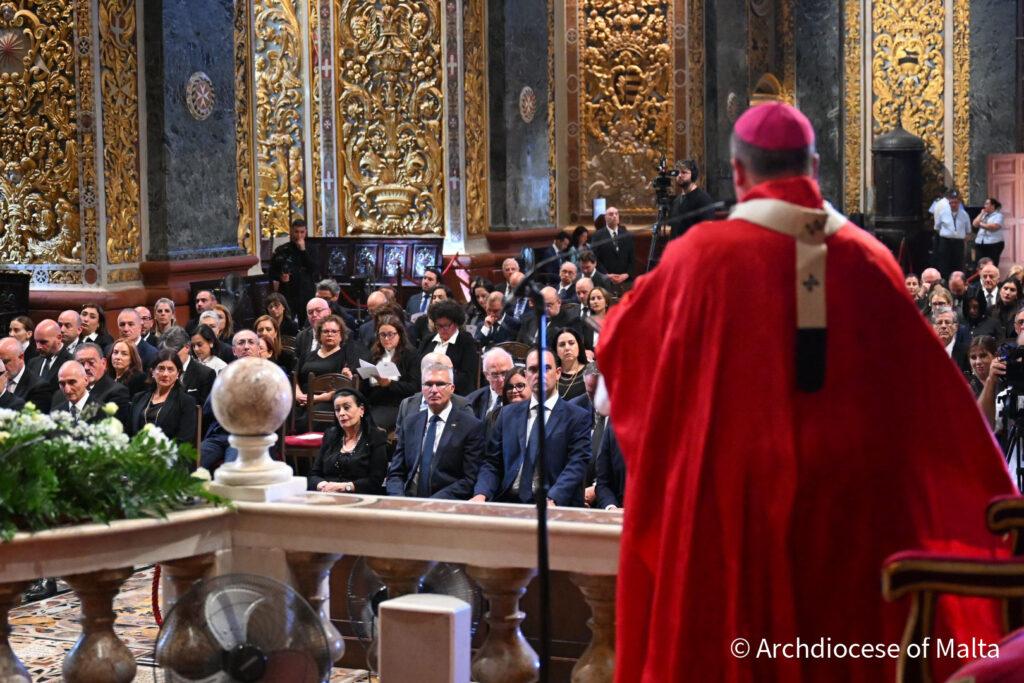
Public confidence in the courts cannot ultimately be commanded. It has to be earned, day after day: through independence, competence, integrity, consistency, transparency where transparency is possible, discretion where discretion is necessary, and decisions whose reasoning demonstrates that every person has truly been heard.
A court’s deepest authority is, therefore, moral.
Citizens accept decisions or judgments they dislike when they remain convinced that the process was honest, the judge independent, the hearing fair and the law applied without fear or favour.
Once that confidence is lost, something much greater than an individual case is damaged. The social fabric itself begins to fray.
Fourth: the protection of rights must always be understood within concern for the common good.
The common good is not the victory of the majority over the individual. Neither is individual right simply the freedom to disregard everyone else.
The difficult vocation of law is to hold these realities together.
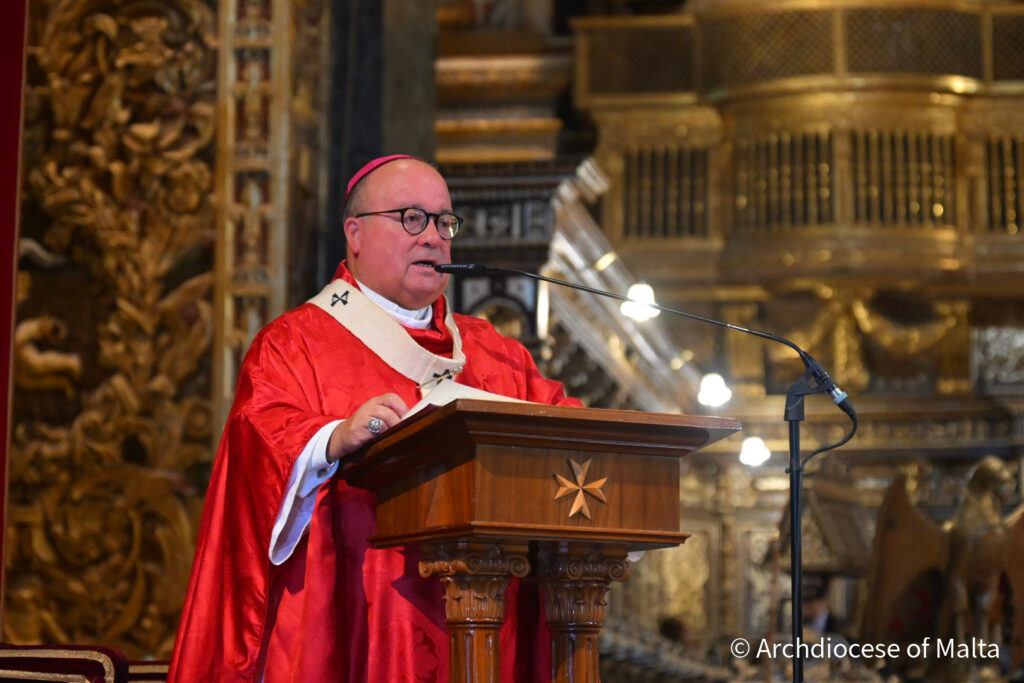
In Christian thought, the common good is the good of all and of each. Justice cannot sacrifice the one for the convenience of the many; nor can it forget the many when defending the one.
This requires wisdom – that beautiful biblical gift which Solomon asked of God when he was entrusted with judgement: “Give your servant an understanding heart to judge your people and to distinguish right from wrong” (1 Kings 3:9).
Perhaps there is no more appropriate prayer for the beginning of a Judicial Year.
Fifth and finally: respect for procedure protects justice itself.
Procedure can sometimes appear technical, cumbersome, even frustrating.
But procedure is not the enemy of justice. Proper procedure is one of justice’s great protections.
It ensures that both sides are heard. That evidence is tested. That reasons are given.
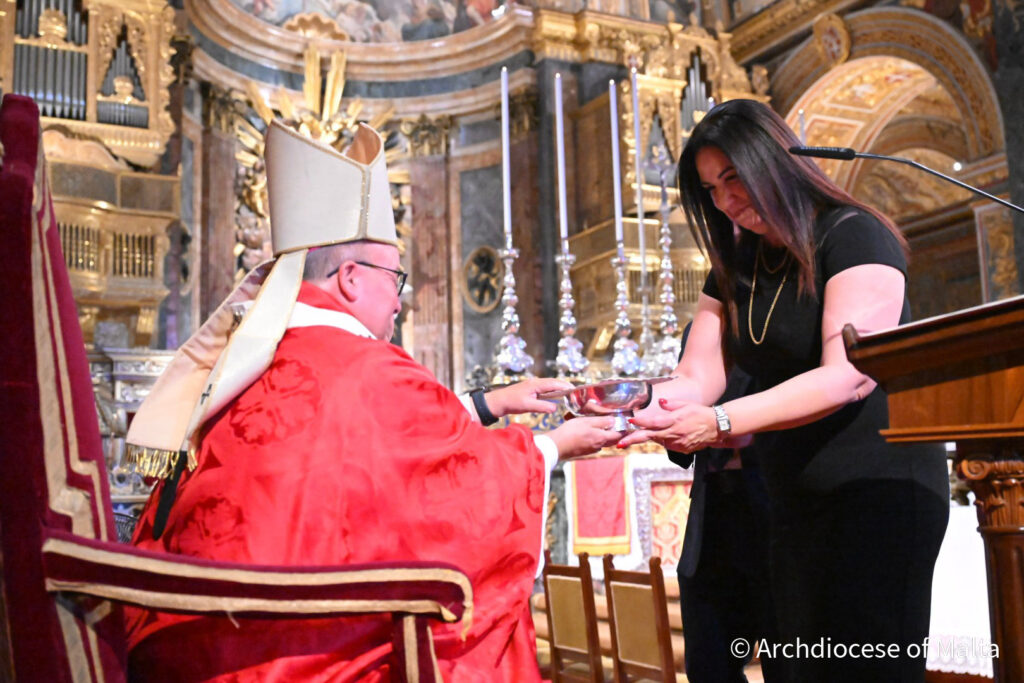
When procedure is abandoned because the desired result appears obvious, justice can quickly become arbitrary.
There is also another temptation: to confuse mercy with the abandonment of justice.
Christian mercy is never indifference to truth.
Mercy does not say that evil is good, that wrongdoing does not matter, or that the rights of another may simply be forgotten. Authentic mercy begins by looking truth in the face.
That is why justice and mercy are not enemies. Mercy prevents justice from becoming vengeance; justice prevents mercy from becoming sentimentality.
Dear brothers and sisters, at the beginning of this Judicial Year, perhaps these five principles can become five commitments:
Seek the truth. Form the conscience. Build trust. Serve the common good. Respect the process.
And perhaps all five are contained in one sentence from the Gospel:
“The truth will set you free” (Jn 8:32).
The truth may sometimes disturb us before it frees us but, ultimately, only truth can sustain justice.
So today we pray for all who will enter our Courts during the year ahead: those seeking justice, those accused of wrongdoing, those carrying wounds, those defending rights, those giving evidence, those burdened by decisions they must make.
And especially we pray for you who have been entrusted with the solemn responsibility of administering justice.
May our Courts be places where power bows before law, where law remains at the service of the human person, and where the search for truth never grows tired.
✠ Charles Jude Scicluna
Archbishop of Malta