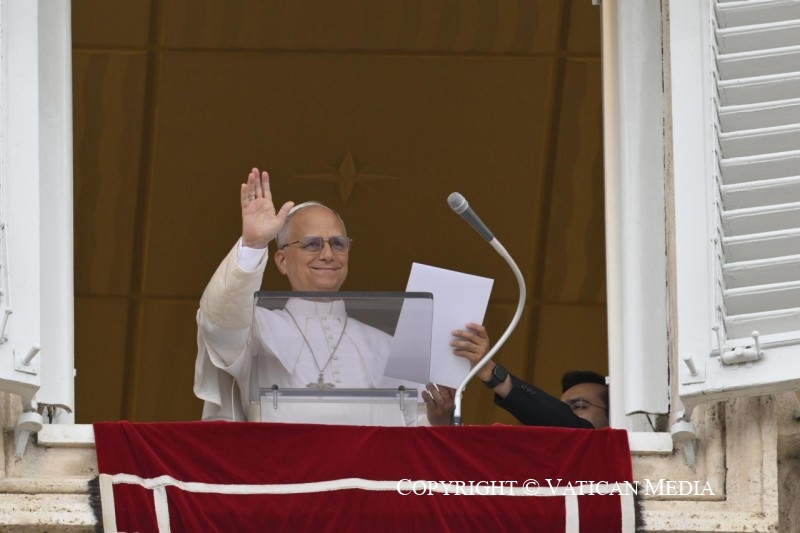




Dear brothers and sisters, happy Sunday!
In today’s Gospel, we hear some of the words Jesus addressed to his disciples during the Last Supper. As he turns the bread and wine into a living expression of his love, Christ says: “If you love me, you will keep my commandments” (Jn 14:15). This statement frees us from the misconception that we are loved because we keep the commandments, as if our righteousness were a prerequisite for God’s love. On the contrary, God’s love is the basis for our righteousness. We truly keep the commandments according to God’s will when we recognize his love for us, just as Christ revealed it to the world. Jesus’ words are therefore an invitation to enter into a relationship, not a blackmail or a suspicious ultimatum.
This is why the Lord commands us to love one another as he has loved us (cf. Jn 13:34): it is Jesus’ love that begets love within us. Christ himself is the standard, the measure of true love: the love that is faithful forever, pure and unconditional. The love that knows no “buts” or “maybes;” the love that gives of itself without seeking to possess; the love that gives life without taking anything in return. Because God loved us first, we too can love, and when we truly love God, we truly love one another. It is like life itself: just as only those who have received life can live, so too, only those who have been loved can love. The Lord’s commandments are therefore a way of life that heal us from false loves. They are a spiritual lifestyle that is a path towards salvation.

It is precisely because he loves us that the Lord does not leave us alone in life’s trials; he promises us the Paraclete, that is, the Advocate, the “Spirit of truth” (Jn 14:17). This gift is one that “the world cannot receive” (ibid.), as long as it persists in evil, oppressing the poor, excluding the weak and killing the innocent. Those who respond to Jesus’ love for all, on the other hand, will find in the Holy Spirit an ally who will never fail: “You know him,” says Jesus, “for he dwells with you, and will be in you” (ibid.). We can therefore bear witness to God, who is love, always and everywhere. Love is not an idea of the human mind, but the reality of divine life, through which all things were created out of nothing and redeemed from death.
By offering us true and eternal love, Jesus shares with us his identity as the beloved Son: “I am in my Father, and you in me, and I in you” (v. 20). This all-encompassing communion of life refutes the Accuser — the Paraclete’s adversary, the spirit opposed to our defender. In fact, while the Holy Spirit is the power of truth, the Accuser is the “father of lies” (Jn 8:44), who seeks to set humanity against God and people against one another: the very opposite of what Jesus does by saving us from evil and uniting us as a people of brothers and sisters in the Church.
Dear friends, filled with gratitude for this gift, let us entrust ourselves to the intercession of the Virgin Mary, Mother of Divine Love.

Source: vaticannews.va