



Photos/Videos: Miguela Xuereb
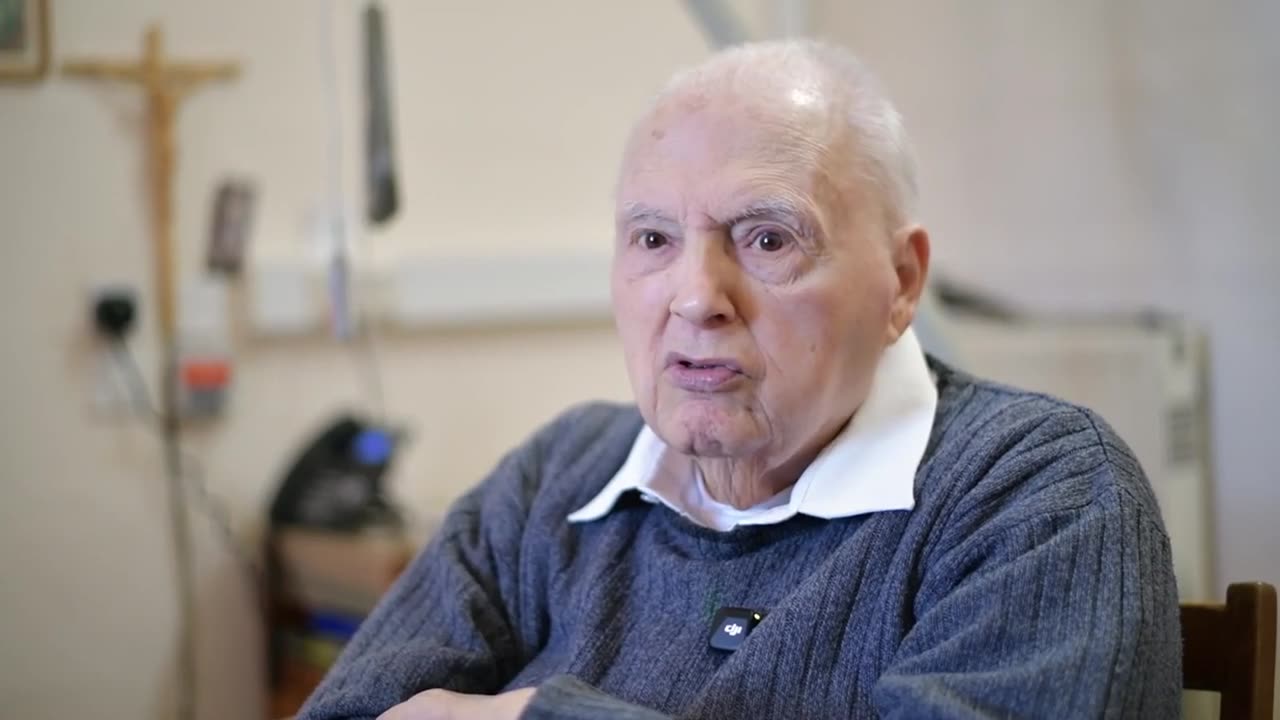
A scholar of the Maltese language who served in several parishes, Newsbook Malta met Msgr. Lawrenz Cachia at Dar tal-Kleru, where he is now retired, to share some of his fondest memories from his 70 years as a priest.
He told Newsbook Malta that he enjoyed seeing people take an interest in his sermons, “but ultimately, it is in the Lord’s hands how much good has been done.”
Msgr. Lawrenz Cachia was born in Żebbuġ on Friday, 22 April 1932, and was ordained a priest in 1956. He graduated in Theology from the University of Malta. He served as parish priest of Gudja between 1959 and 1963, and subsequently served as archpriest of Żebbuġ from 1963 to 1984.
In 1984, he was appointed a member of the Marriage Tribunal, a position he held for 22 years, until 2006. In 1994, he was appointed a Monsignor as a member of the Cathedral Chapter.
In 1996, Msgr. Cachia was awarded Ġieħ ir-Repubblika by the Maltese Government, and in 2017 he received the Gold Medal of the Akkademja tal-Malti.
He said that he began writing mostly after he stopped serving as archpriest. During the war, Malta’s national poet, Dun Karm Psaila, was in Żebbuġ. Cachia and others would read his poems and attend Mass celebrated by him. As his friendship with Dun Karm grew, so did his love for the Maltese language.
He also recounted his memories of the poet Karmenu Vassallo, who further inspired his love of Maltese. Msgr. Lawrenz Cachia has published several works about Dun Karm Psaila.
His publications on the Maltese language include Il-Verb fil-Malti: Studju dwar il-Forom (1984), Grammatika Ġdida tal-Malti (1994), L-Ilsien Malti: Ilbieraħ u Llum (1994), an edition of L-Ewwel Dizzjunarju Malti tal-Kavallier Thesan (1999), Ħabbew l-Ilsien Malti (2000), and Ilsna Semitiċi (2004), among other publications.
Interestingly, Msgr. Lawrenz Cachia’s first two poems were about St Philip and the other about the Madonna, written when he was still attending the M.U.S.E.U.M.
Asked whether he worries about the fact that some young Maltese people are not interested in the Maltese language, he said that, for him, “Maltese is part of our civilisation, part of our nationalism.”
He said he would like Maltese not only to be written correctly, but for there to be genuine interest in the language. At this point, he recounted the linguistic struggle with Italian, which during his youth was considered a superior language.
His appeal to those who are eager to write is to continue studying.
He ended the interview with a message for those who are discerning whether they have a vocation to the priesthood. He said that the Lord continues to call people, but ultimately it is up to each individual to choose whether to listen and respond to that call. For him, he said, the priesthood had been a great source of joy.
Source: Newsbook.com.mt
Article written by Christine Muscat