



The Laudato Sì Platform’s fifth annual report highlights growing participation, initiatives led by religious congregations and Catholic communities worldwide, and new tools to strengthen the Church’s commitment to integral ecology.
The fifth annual report of the Laudato Si’ Action Platform highlights growing participation, practical initiatives worldwide, and the challenges facing the Church as it turns ecological commitments into lasting change.
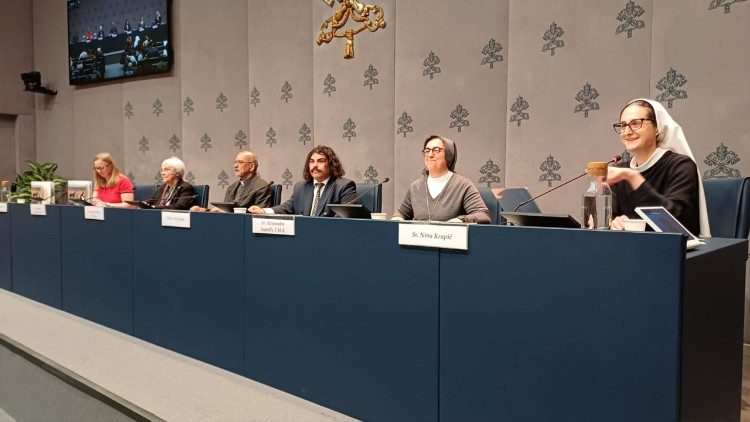
A press conference at the Holy See Press Office on Wednesday presented the report with help from some of those involved in working with the Platform for ecological conversion. They reflected on achievements and progress and presented new initiatives such as the launch of a new Digital Atlas that will help Catholic communities share experiences and respond to environmental challenges.
The Laudato Si’ Action Platform has welcomed more than 13,600 participants in its first five years, as the Church continues to transform the message of Pope Francis’ encyclical into concrete action for the care of our common home.
One of the speakers at the briefing was Sr. Alessandra Smerilli, Prefect of the Dicastery for Promoting Integral Human Development, who stressed that Laudato Si’ was never intended simply as a text to be read, but as an invitation to personal and communal conversion.
“Ten years are not many in the life of the Church, but they are enough to ask ourselves what happens when an encyclical takes root: not only in words, but in prayer, in the land we cultivate, in the young people we educate, and in the decisions of our institutions,” she said.Read also25/05/2021

Pope on Laudato si’ Platform: ‘What world will we leave our children?’
The Platform was launched in 2021, following the Laudato Si’ Year announced by Pope Francis in 2020. It provides a digital space where families, parishes, schools, religious congregations, dioceses and other institutions can develop integral ecology plans, undertake practical initiatives and monitor their progress.
Care for creation, Sr. Smerilli explained, cannot be treated as a secondary concern in Christian life. Referring to the biblical call to cultivate and protect the garden of Eden, she recalled that safeguarding creation is an integral part of the Christian vocation.
The Platform, she said, offers communities a shared journey of reflection, discernment, planning and action, while respecting the different circumstances and possibilities of local Churches.
“An invitation is not enough: those who ask for a commitment must also accompany those who undertake it,” she said, highlighting the need to ensure that all communities, including those with fewer resources, can participate.
Participation on the rise
According to figures presented in the report, the Platform had registered 13,652 accounts as of 30 September 2026. After an initial surge following its launch, registrations declined before rising again in 2026. With 2,081 registrations recorded by September, participation has already exceeded the totals for each of the previous three full years.
Religious congregations have been particularly active, with approximately 53% of the world’s religious congregations estimated to be registered on the Platform.
Among the most frequently reported activities are recycling, purchasing food from local producers, composting and installing energy-efficient lighting. The report notes that many of these initiatives can begin without major financial investment or institutional approval.
A new Digital Atlas and priorities for the coming years
Alonso de Llanes, Programme Director of the Laudato Si’ Action Platform, presented a new Digital Atlas designed to connect Catholic institutions’ ecological initiatives with geographical and environmental information.
The interactive tool, he said, allows users to explore participating institutions by country or diocese and, where permission has been granted, access their ecological plans and experiences. It also brings together environmental information, including data on deforestation, emissions and exposure to hurricanes.
The aim, de Llanes explained, is to help Church leaders and local communities better understand the environmental conditions in which they operate and identify opportunities for collaboration.
He also outlined three other priorities for the Platform’s next phase: making participation more accessible, improving the use of data and developing a global network of Digital Missionaries.
Excluding no one
Highlighting the fact that a particular focus will be on communities with limited internet access, he said that for the first time, the core Platform journey will be available through printed resources, enabling communities to reflect, develop ecological plans, identify actions and review their progress offline.
A new Learning Hub will also help participants access practical resources and learn from initiatives undertaken by other Catholic institutions.
The Platform, de Llanes added, is further exploring the use of artificial intelligence to help participants identify relevant resources and possible actions, while improving the assessment of ecological initiatives. However, cautioning against treating technology as a substitute for human discernment, he said “Artificial intelligence can help us find possible answers. It cannot decide which answers are right for a community.”
From counting actions to measuring change
The report also acknowledges that participation figures and completed activities do not, by themselves, demonstrate lasting environmental impact, and the Programme Director stressed that “An enrolment is a beginning, not an achievement. A plan is a commitment, not yet a result. And an action reported as complete does not necessarily tell us what changed.”
He cited the example of a tree-planting campaign in Nigeria, where one diocese chose not to plant additional trees until it had a credible plan to water and care for those already planted. This experience, he explained, illustrates the importance of moving beyond counting activities towards assessing their long-term results.
And looking ahead to 2031, he said the Platform aims to reach 50,000 participants, 20,000 Catholic institutions and 1,000 represented dioceses. Its priorities include expanding participation, strengthening local accompaniment, improving access to resources and enabling communities to learn from one another.
The central challenge, as all the speakers at the press conference emphasised, is to ensure that the ecological conversion called for by Laudato Si’ becomes part of the everyday life and decision-making of the Church.
As de Llanes concluded: “We have spent five years bringing communities to the Platform. Now we want the Platform to bring communities to one another.”
From parish and local initiatives to diocesan commitment
Bishop Allwyn D’Silva, Auxiliary Bishop Emeritus of Bombay, shared his experience of ecological initiatives in the Archdiocese of Bombay, where communities have sought to connect environmental responsibility with ordinary pastoral life.
He said one initiative has been a “carbon fast” during Lent, encouraging Catholics to reflect on their consumption of electricity and water and their use of plastic.
In Mumbai, he explained, environmental challenges are already affecting daily life, with severe monsoon flooding, the loss of mangroves and rising temperatures placing vulnerable communities at particular risk. “Care for creation is part of our pastoral responsibility,” he said.
Describing initiatives in local parishes, including rainwater harvesting, solar energy, reducing disposable plastics and promoting biodiversity, the bishop said these efforts have also encouraged cooperation among parishes and the sharing of practical experience.
Last year, he said, more than 100 people gathered in Mumbai to discuss a common ecological plan for the Archdiocese’s 125 parishes.
Bishop D’Silva also pointed to the importance of continuity, noting that environmental initiatives can lose momentum when priests or volunteers move on. The Laudato Si’ Action Platform, he continued, offers a framework for communities to develop plans, review progress, and maintain their commitments over time.
“A carbon fast lasts forty days. But the decisions our institutions make can shape people’s lives for decades,” he said. “If our faith can change what we choose for forty days, why should it not change what our institutions choose for the next forty years?”
Responding to the cry of the earth and the poor
Sr. Roxanne Schares, Executive Secretary of the International Union of Superiors General (UISG), highlighted the contribution of women religious to the implementation of Laudato Si’, describing their commitment as a response to the call to care for the common home.
Since 2021, she said, thousands of religious sisters have received training as Laudato Si’ animators, working with their congregations, mission partners and local communities to promote ecological conversion.
She cited the example of the Sisters of Notre Dame in South Korea, who walked through threatened tidal wetlands alongside children and local residents, praying, listening and standing in solidarity with those working to protect the area. The initiative, she noted, developed into a wider journey of transformation through education, solidarity and public witness.
In South Sudan, meanwhile, sisters began working with local farmers to recover agricultural skills lost during decades of armed conflict and forced displacement. This initiative, the Executive Secretary highlighted, has since expanded into a sustainable agriculture project supporting food security, nutrition and livelihoods while respecting the environment.
Reflecting on her own experience in Africa, Sr. Schares recalled visiting the shores of Lake Chad, where she saw women walking long distances through the sand in search of water for their families.
These experiences, she said, demonstrate the importance of accompaniment, service and advocacy, which together help ensure that the voices of vulnerable communities are heard.
The UISG represents nearly 600,000 sisters from approximately 1,900 congregations across six continents. Through their presence in schools, hospitals, pastoral and social services, religious women contribute to building what Sr. Schares described as a “critical mass for real change”, and she noted that more than half of the world’s religious congregations are now enrolled in the Laudato Si’ Action Platform.
According to Sr. Schares, the Platform provides a common framework for reflection, discernment, new initiatives and collaboration, helping deepen ecological conversion throughout the Church and the wider world.
The need for a more inclusive response
Wrapping up the interventions, Lorna Gold, Executive Director of the Laudato Si’ Movement, said the fifth anniversary is both an occasion for gratitude and a moment to renew the urgency of the Church’s ecological commitment.
She stressed that the climate emergency is intensifying, while communities continue to face extreme weather events, environmental degradation, displacement and threats to their livelihoods.
“The pace of ecological destruction is not slowing to match the pace of institutional change,” she said.
Gold highlighted the complementary roles of the Laudato Si’ Movement and the Action Platform. While the Movement focuses on spirituality, grassroots mobilisation, formation and advocacy, the Platform provides institutions with a framework to organise commitments, plan initiatives and monitor progress.
She also called attention to inequalities that limit participation, particularly in parts of the Global South, where communities often face significant environmental challenges but lack financing, technical assistance, reliable internet access and personnel.
“We cannot call our response truly global if the communities facing the greatest obstacles have the fewest resources to participate,” she said, and she called, in the next five years, for greater institutional commitment, more equitable access to resources, stronger links between local initiatives and wider advocacy, and sustained accompaniment of communities.
Ecological conversion, she added, must influence decisions concerning investments, energy, education, property, procurement and governance, rather than remain confined to occasional environmental activities.
Source: vaticannews.va