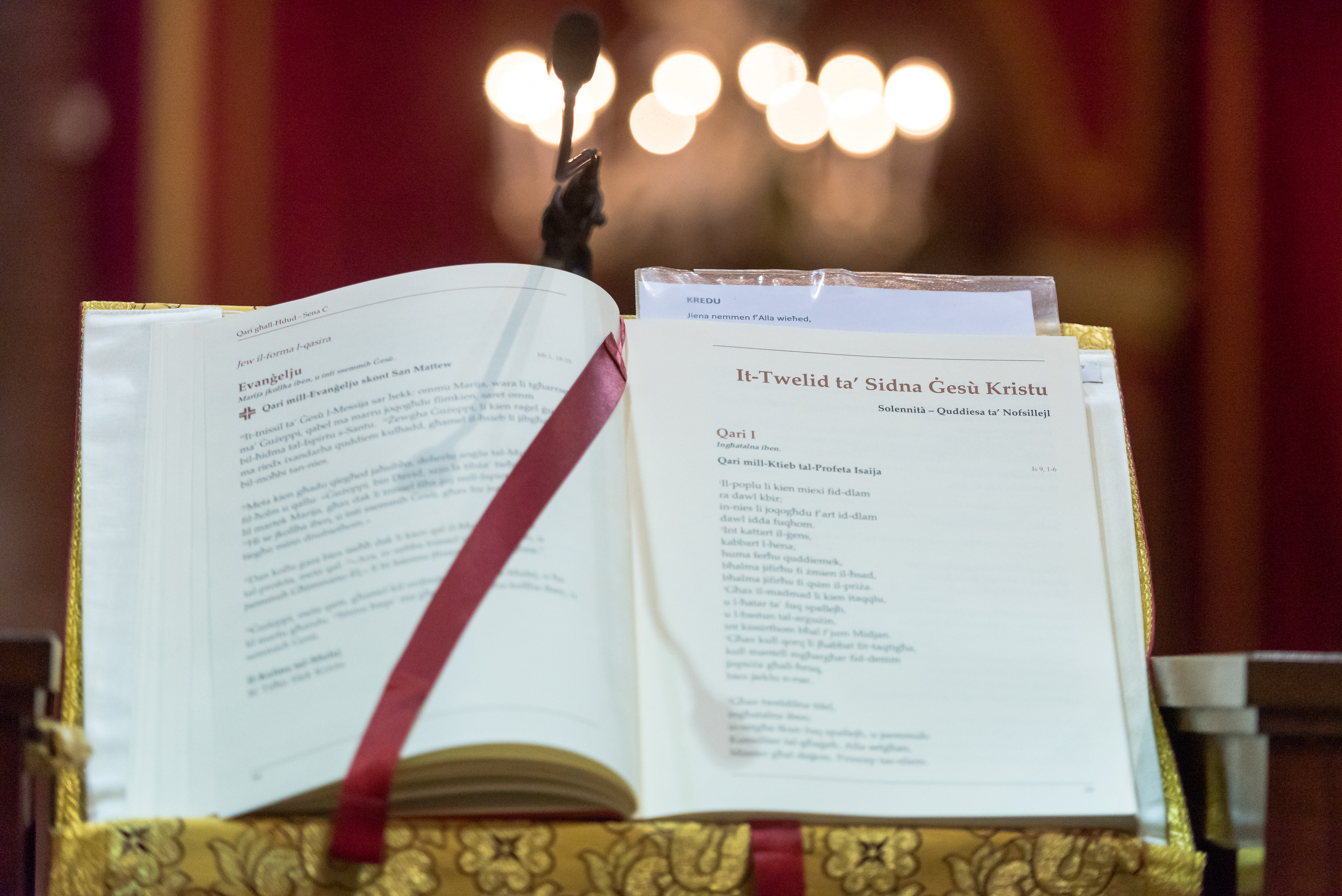





“Woe to me if I do not proclaim the Gospel” (1 Cor 9:16). These are the words of St Paul. This conviction was at the heart of the Church from the very beginning: her mission is to proclaim the Gospel, to proclaim the life and words of Jesus, the Saviour of the world. This conviction must also be ours today.
At times, there are those who do not fully understand the Church’s responsibility to proclaim the Gospel, and to bring the Word of God to the world. Some may think that the Church’s role is to speak about works of art, decorations and personal devotions, and to stop there; that she should not speak about the Gospel and the way it touches people’s lives. It is as though the Church should not involve herself in such matters.
But this is contrary to what Jesus taught us and to what Jesus asks of us. He wants us to bring the Word of God into the lives of people today and to proclaim it in a way that speaks to the realities of their lives.
Works of art are, indeed, beautiful, as are the devotions that have been handed down through the ages. Yet all these are expressions of faith throughout the centuries. We are called to continue living that faith today and to discover how it can be lived out in our everyday lives.
As Pope Leo XIV has emphasised in Magnifica Humanitas, quoting the words of Pope Francis: “No one can demand that religion should be relegated to the inner sanctum of personal life, without influence on societal and national life, without a right to offer an opinion on events affecting society” (n. 19).
This, therefore, is our responsibility: to proclaim the Word of God, the Word which is truth, and to bring that truth to all people today. When we proclaim the Word of God, it is not so that we can point a finger at someone else or at certain people. Rather, we must take a critical look at ourselves – individually, as a Church, as a society and as a nation.
At times, it is striking to see certain disgusting reactions, particularly on social media, which are the result of prejudice, ignorance, or outright hatred – or, perhaps, all three together. These are comments filled with insults, vulgarity and animosity, directed at the Church or at her leaders. As Jesus said so clearly: “Out of the abundance of the heart, the mouth speaks” (Matthew 12:34).
What should our reaction be? In the face of obscene comments, our response should be: Lord, forgive them, for they do not know what they are doing, what they are writing, or what they are saying.
But our response should also be to continue proclaiming the Gospel without fear. Our aim is not to say things intended to please one person or another. It is to proclaim the Word of God as it is. We should not let ourselves be intimidated. Instead, we should continue with an even deeper conviction: what is good, let us call good; what is true, let us call true; what is evil, let us call evil; and what is false, let us call false.
✠ Joseph Galea-Curmi
Auxiliary Bishop of Malta
This article was published in the Sunday Times of Malta on October 11, 2026