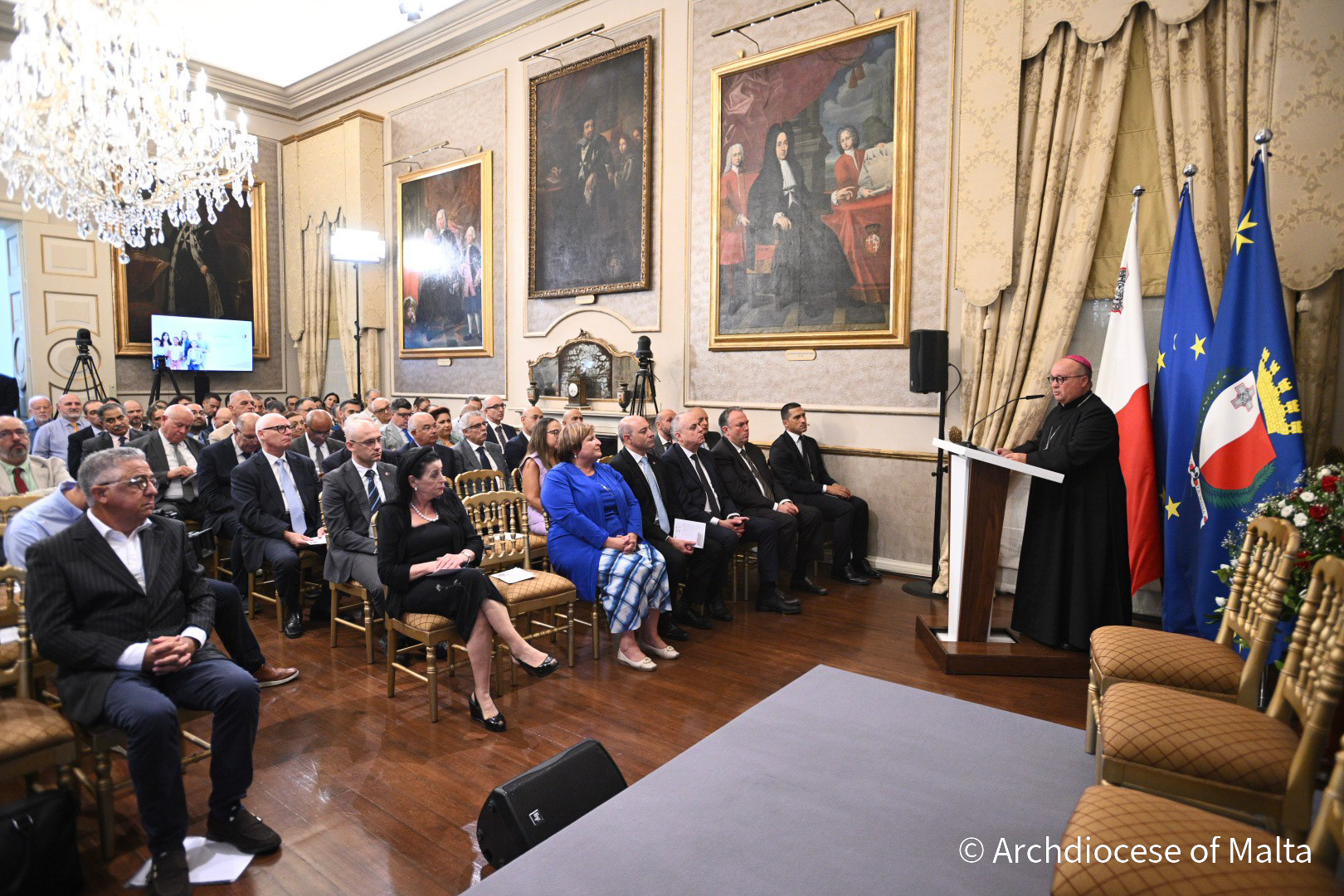




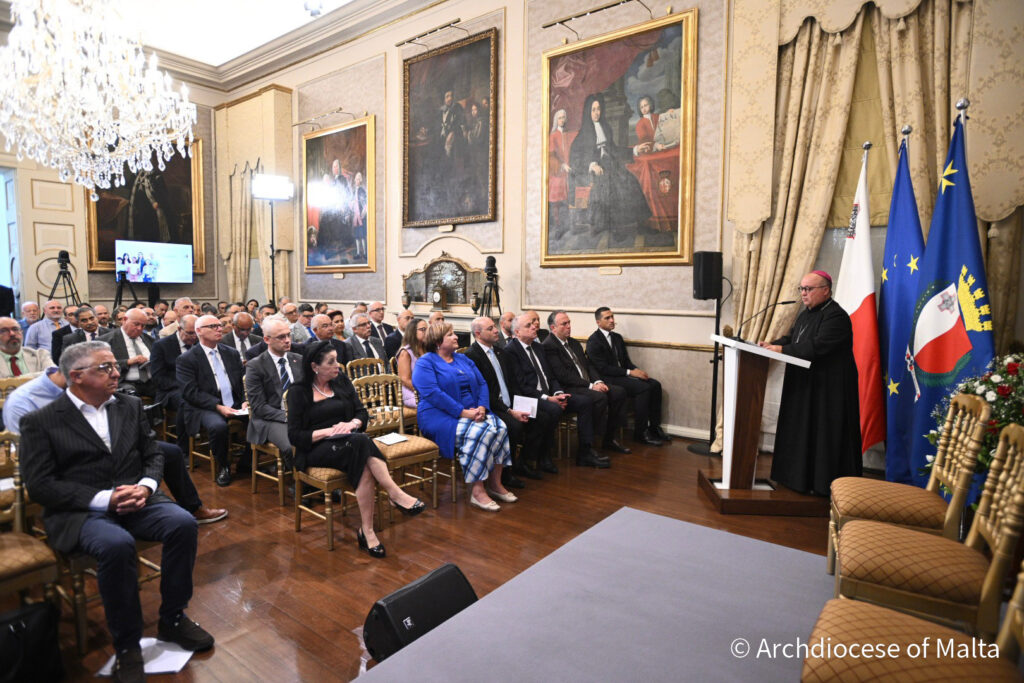
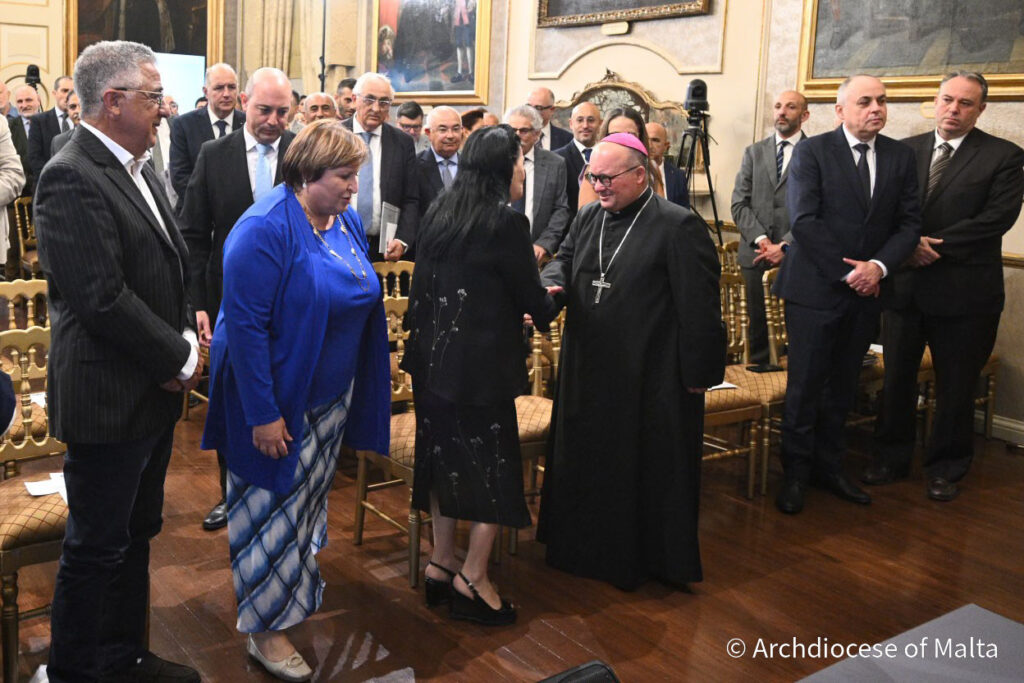
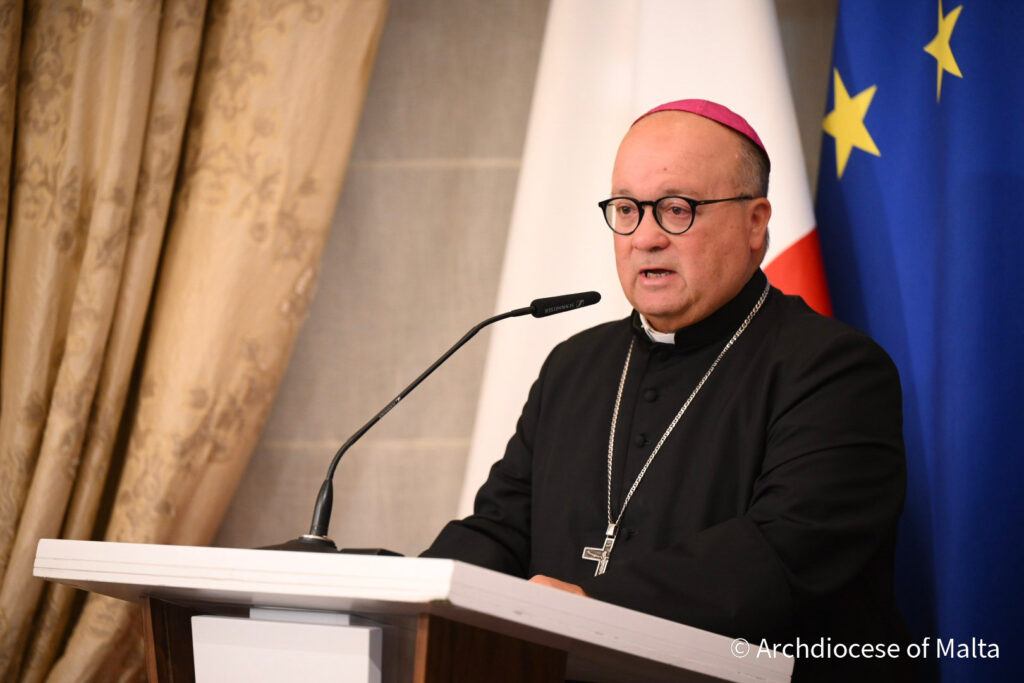
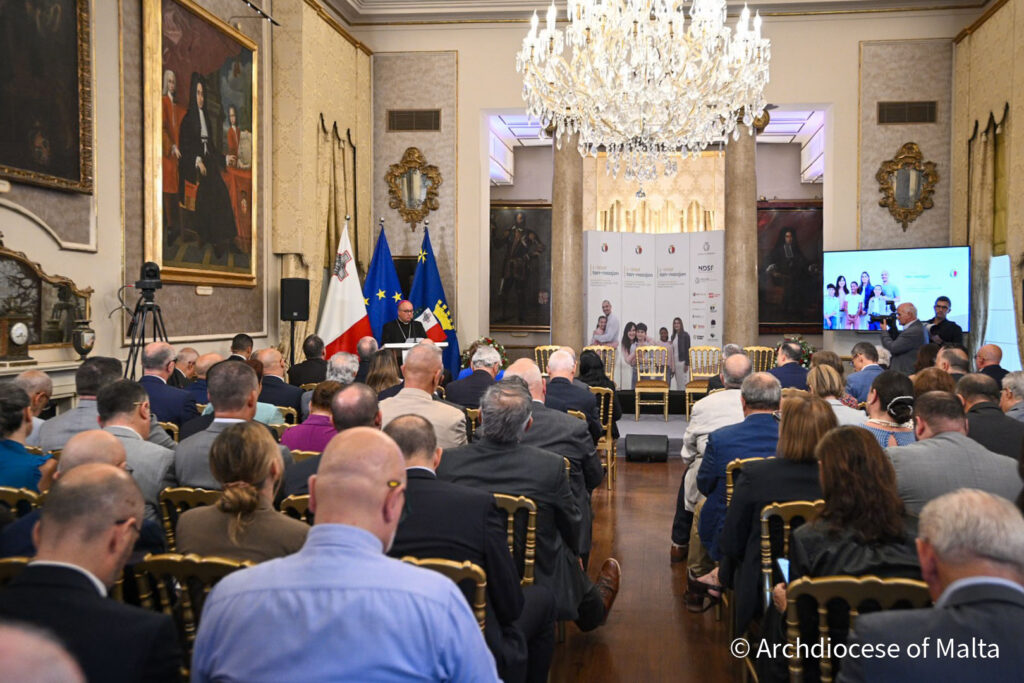
Speech by Archbishop Charles Jude Scicluna
Try to imagine a child wandering around Malta 50 years from now.
What will that child see? What language will that child speak? And what will they understand by the word ‘Maltese’? Will they feel that they belong to a people, a history, a culture, a place or will they be stranded in the wilderness? And what will they think of us?
Because the Malta that child inherits is being formed, or deformed, by us right now. The decisions we make today about our families, our economy, our environment, our institutions and our values will shape the nation we hand over to them.
The title of this annual conference ‘State of the Nation’ is particularly apt. Because Malta is not simply a country with borders and a government. It has developed as nation of people who feel they belong together — bound by culture, history, language, traditions and a shared identity.
Our identity as Maltese — as Ulied din l-Art Ħelwa — is something entrusted to us. We received it from those who came before us, we hold it for a time, and one day we must pass it on.
Preserving that identity is therefore a question of justice: justice towards our forefathers, but also towards generations not yet born.
And that begins with how we value the next generation.
Children must be seen not as a burden, but as a gift and a blessing. Families should feel that bringing children into the world is something society values and supports.
That requires policies which strengthen families, including a serious discussion about parental leave. Childcare is important, but we should also create conditions that allow more parents to remain with their children during those crucial early years.
And we must value parenting itself. A parent who stays at home to care for a child is not “stopping work” but investing in that child’s future – and in the future of society.
We must also cherish our identity. Over centuries, we Maltese have absorbed influences from many different peoples. Yet something recognisably Maltese emerged. We are Mediterranean, but also distinct and unique.
That identity should give us the confidence to engage with other cultures and be enriched by them, without losing who we are. Those who come here in good faith, who settle and work among us and raise their families here, should be welcomed with dignity. But they should also be encouraged to appreciate what makes these islands unique and become participants in the responsibilities, as well as the opportunities, of Maltese society.
Ultimately, the way to preserve what makes us Maltese is to ensure there is a new generation to inherit it. That means creating conditions to reverse our alarmingly low birthrate.
But inheritance is not only about what we preserve. It is also about the condition in which we leave our nation. So, I return to the uncomfortable question: what kind of nation are we handing on?
In 2003, Warren Buffett wrote to the heads of his companies. He told them:
“We can afford to lose money, even a lot of money… but we cannot afford to lose reputation, not even a shred of reputation.”
He told them to behave as though everything they did might appear on the front page of a national newspaper, written by an unfriendly but intelligent reporter.
And then came the warning:
“It took us 37 years to build our reputation, but we can lose it in 37 minutes.”
I’m acutely aware that the Church is not immune to this. And we have an unfortunate habit of learning this painful lesson the hard way.
But a nation can lose its reputation too. It would be wise to confront what has been happening to ours.
There have been too many accounts of businessmen buying influence; politicians and public officers being corrupted; police officers assisting criminals; and journalists participating in wrongdoing rather than exposing it while fraudulently presenting themselves as bona fide guardians of the Fourth Estate.
These matters should trouble every one of us. Because these matters are much bigger than one incident or one institution. They raise the possibility of networks of influence in which money, access, information, favours and protection circulate among people who are supposed to operate independently of one another.
We have to ask what this tells us about the health of our nation. Is everyone in Malta for sale? And if not everyone, then how many people can be bought? How many people prepared to remain silent, return a favour or simply look the other way?
And we must have the courage to ask whether networks are developing within our society that operate almost as closed fraternities where loyalty, mutual protection and privileged access become more important than loyalty to institutions and the public good.
When informal networks become more powerful than formal institutions, the danger is no longer simply corruption. The danger is the capture of the nation itself.
And perhaps the most fundamental question is this:
Have we fallen to the seduction of money as the main criterion of our progress and our quality of life?
The Gospel puts the choice starkly in Matthew: “You cannot serve God and Mammon.”
Mammon means money, material wealth and possessions.
There is nothing inherently wrong with prosperity. It can provide security, opportunity, education and dignity.
But prosperity also brings responsibility. The danger begins when prosperity ceases to be a means and becomes the end.
I recently returned to one of my favourite books, The Little Prince by Antoine de Saint-Exupéry.
The Little Prince travels from planet to planet, meeting grown-ups trapped in their own little worlds — their own echo chambers, we might call them today.
On one planet, he meets a businessman obsessed with counting the stars because he believes that owning them makes him rich.
The Little Prince cannot understand the point of possessing something simply for the sake of possession.
He explains that what he owns, he also cares for: he waters his rose and tends his volcanoes. “It is useful to my flower that I own her,” he tells the businessman. But the businessman is of no use to the stars.
It is a simple exchange with a powerful message: what matters is not what we own, but what we care for, nurture and make useful. And that applies to Malta.
With our increasing wealth, and all the possibilities it brings, comes a duty to care, protect and plan for the future. And to cherish human life from conception to natural death.
Our economic model must serve society, our social policies must support those who need them, and we must have the courage to think beyond the next year, the next election or the next economic statistic.
So let us return to that child looking across Malta 50 years from now.
What will we have left them? A richer country, perhaps. But will it be a better nation?
Will we have protected our land and sea, our villages, language, heritage and the beauty of these islands? Will our institutions — our police, courts, public service, politicians and journalists, the Church — deserve their trust?
Will they say we became richer, but poorer in everything that mattered?
Or will they say that, when it mattered, we did the right thing?
Like the Little Prince’s rose, Malta’s value lies not simply in possessing it, but in caring for it.
Malta is our home. One day, it will be theirs.
Let us make sure ours is not the generation that lets them down, but the one that gives them reason to hope.
✠ Charles Jude Scicluna
Archbishop of Malta