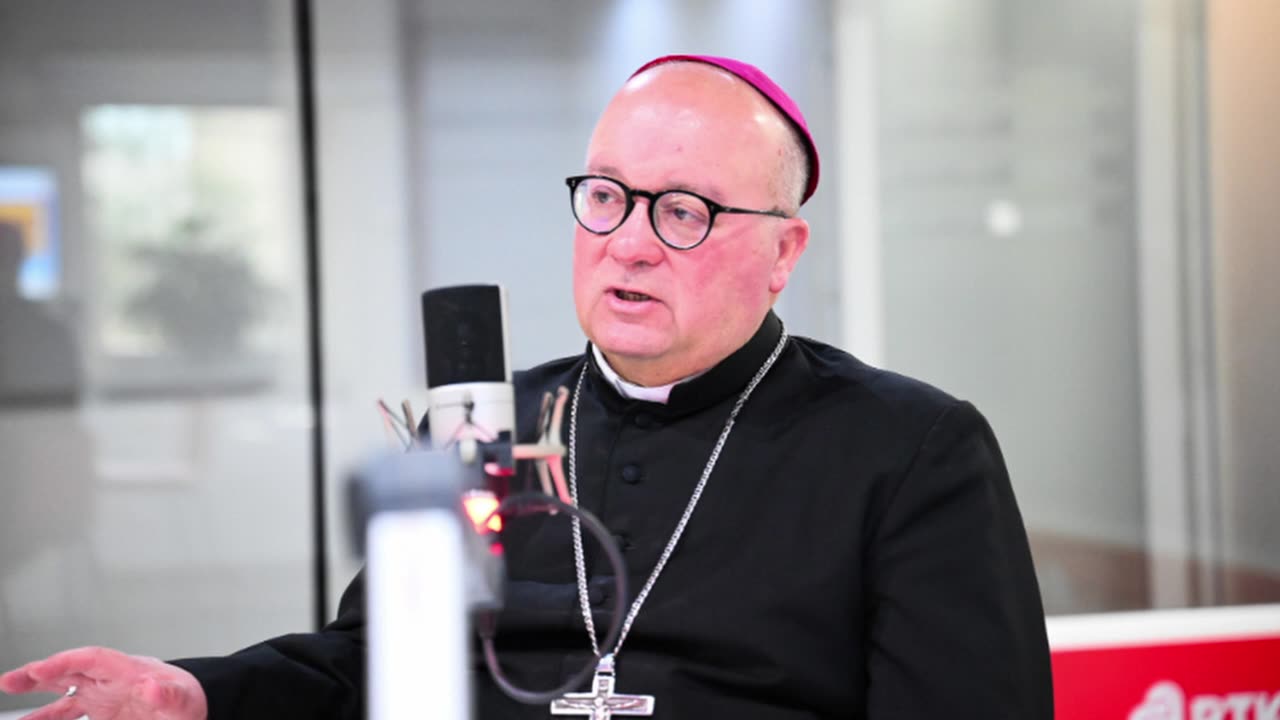





Archbishop Charles Scicluna has appealed for common sense and cooperation between authorities over the growing presence of burlesque-style performances in the streets of Valletta, warning that turning the historic capital’s roads into what he called a “burdell” – a brothel – does no good to anyone.
Speaking by telephone to the programme Għal Kulħadd, presented by Christine Delicata on RTK103, the Archbishop was asked about the controversy surrounding performances staged near the Church of Ta’ Ġieżu, run by the Franciscan friars, which has drawn public criticism after footage of a dancer on the church steps circulated widely on social media.
Archbishop Scicluna acknowledged that society inevitably evolves, but insisted that human dignity remains a value “always and everywhere”. Valletta, he said, deserves far better than to see its streets transformed nightly into an open-air spectacle of that kind. “These were not scenes of cultural expression,” he said. “They bring no honour, and they are no sign of progress.”
The Archbishop was careful not to frame his concern purely in terms of morality or offence to the many churches that line the city’s streets, though he noted Valletta is rich in places of worship. Rather, he said, what is at stake is respect for the dignity of the persons involved and for the character of the shared environment. Should such entertainment continue, he suggested, it belonged within four walls, accessible only to those who freely choose to seek it out, not spilling into public thoroughfares.
He called on the relevant authorities, including the police, not only to observe and investigate such incidents but to enforce the law where necessary, urging a spirit of cooperation across institutions responsible for the city.
Asked about his own health, the Archbishop said his recovery from surgery to repair a torn tendon was progressing, though slowly, and that physiotherapy remained ongoing. “These are things that happen quickly but take time to heal, and require a great deal of patience,” he said, adding that he continued to carry out his duties as best he could.
The Archbishop also spoke of the recently established Commission for the Promotion of Integral Human Development, which brings together environmental concern and social justice within the Church’s mission. Those committed to caring for creation, he said, bear a responsibility not only for their own wellbeing but towards future generations and in gratitude to those who came before. A tree planted centuries ago, he observed, is one we are duty-bound to preserve for those who come after us.
The commission, he explained, will draw on Church teaching alongside scientific and sociological research, lending the Church’s voice to public discussion on the economy, social justice, housing, poverty and human dignity.
Click here to listen to the interview.
Source: Newsbook.com.mt