




The Archdiocese of Malta urges policymakers to manage the rapid adoption of artificial intelligence in a way that protects people – not replaces them – to ensure workers and vulnerable communities are not left behind.
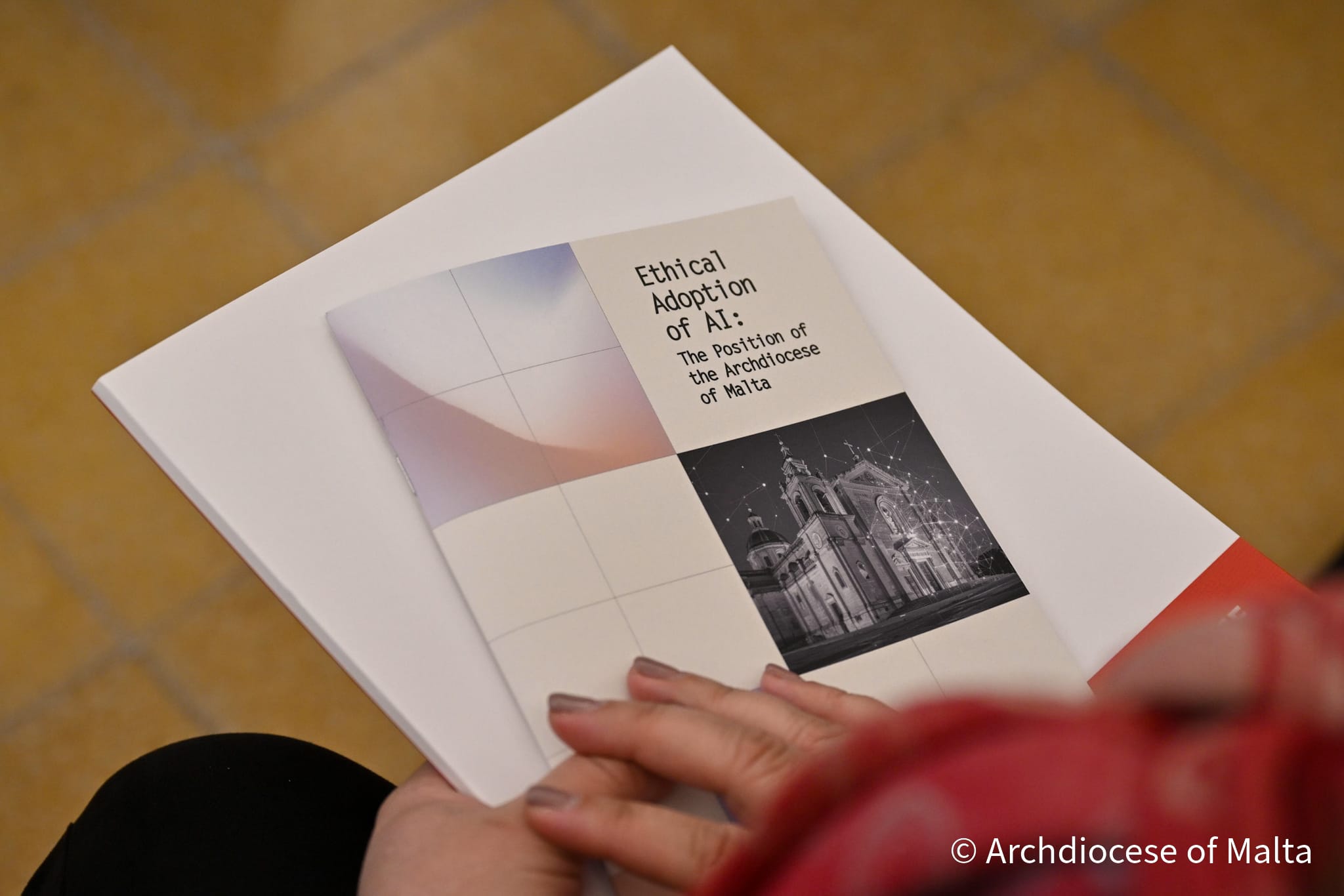
In a position paper entitled ‘Ethical Adoption of AI: the position of the Archdiocese of Malta’, the Church focuses on three key impact areas – education, the economy and culture – and calls for State-led incentives for businesses to retrain and redeploy employees affected by automation since “AI will revolutionise virtually all aspects of labour and the economy”.
Fr Jean Gové, who authored the document, said: “While commending the State for its efforts so far, we call for stronger ethical standards and literacy efforts to safeguard society since ethics will ultimately ensure that AI is a tool we can trust.”
The Archdiocese also believes in the importance of maintaining non-digital access to essential services, stating that “decision-making must always be left to the human person” wherever human lives are affected. It maintains that justice, workers’ rights, and the protection of the vulnerable must anchor Malta’s digital transition.
While AI promises efficiency, safety, and innovation, the Church highlights the intrinsic value of human labour and “the irreplaceable nature of human relationships,” particularly in healthcare, education, and pastoral work
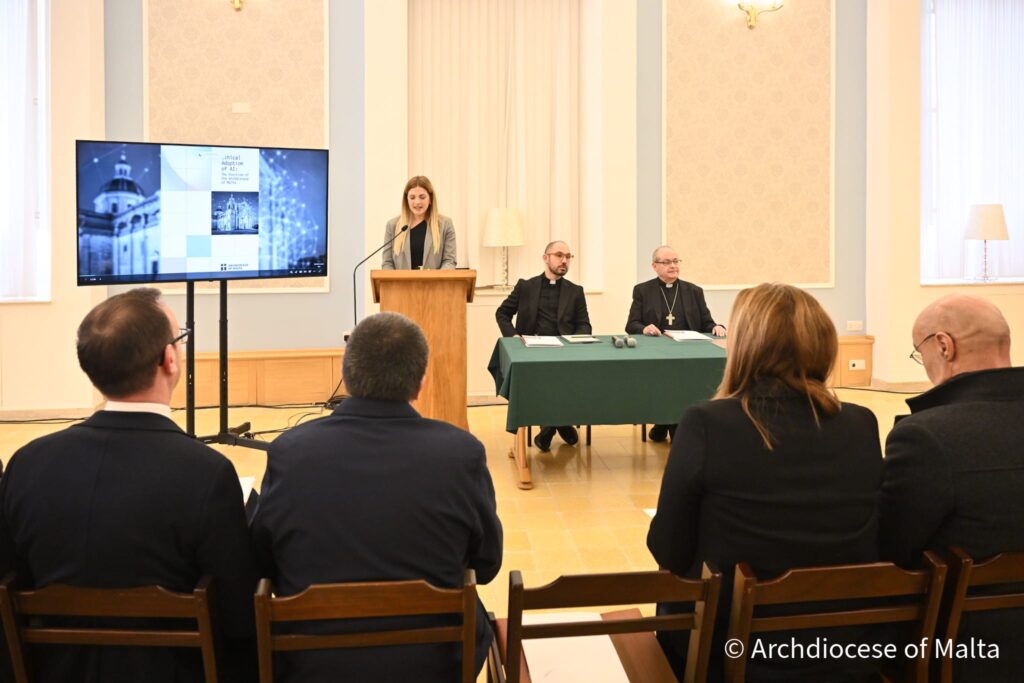
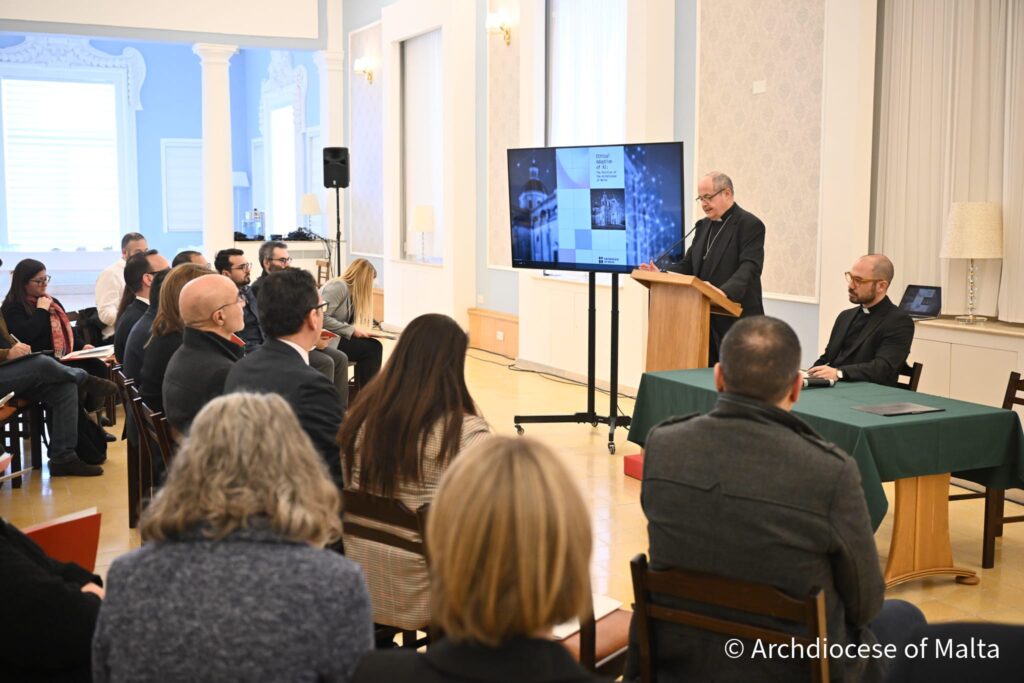
Speaking at the launch, Auxiliary Bishop Joseph Galea Curmi said: “At the heart of the Church’s reflection lies an essential truth that must never be forgotten: technology is a tool; the human person is the subject.” He urged society to ask whether AI truly serves human dignity and the common good.
The Archdiocese also calls for policies that ensure the benefits of AI – such as increased productivity – are shared fairly across society and that AI is “above all else a tool” that must remain under human oversight.
The position paper states that AI’s potential to enhance creativity and problem-solving depends entirely on the intentions and responsibility of those who use it, while misuse risks “diminishing our agency and responsibility” and weakening the relational and ethical dimensions of human life.
The Church speaks about the need for vigilance in the use of AI in education, warning that AI systems must not be used to “exploit students via profiling”, and that human understanding, moral discernment, and care remain essential elements of formation.
The Church speaks about the need for vigilance in the use of AI in education, warning that AI systems must not be used to “exploit students via profiling”, and that human understanding, moral discernment, and care remain essential elements of formation.
The Archdiocese also recognises the exciting possibilities of harnassing AI to celebrate our unique cultural identity, serving as a tool to promote the Maltese language and heritage.
Alongside these recommendations, the Archdiocese is strengthening its own internal capacity for the digital era. It is also initiating AI literacy and ethics training for priests, pastoral workers, educators, social workers, and healthcare professionals to ensure that technology enhances – rather than replaces – the human relationships at the heart of their work.
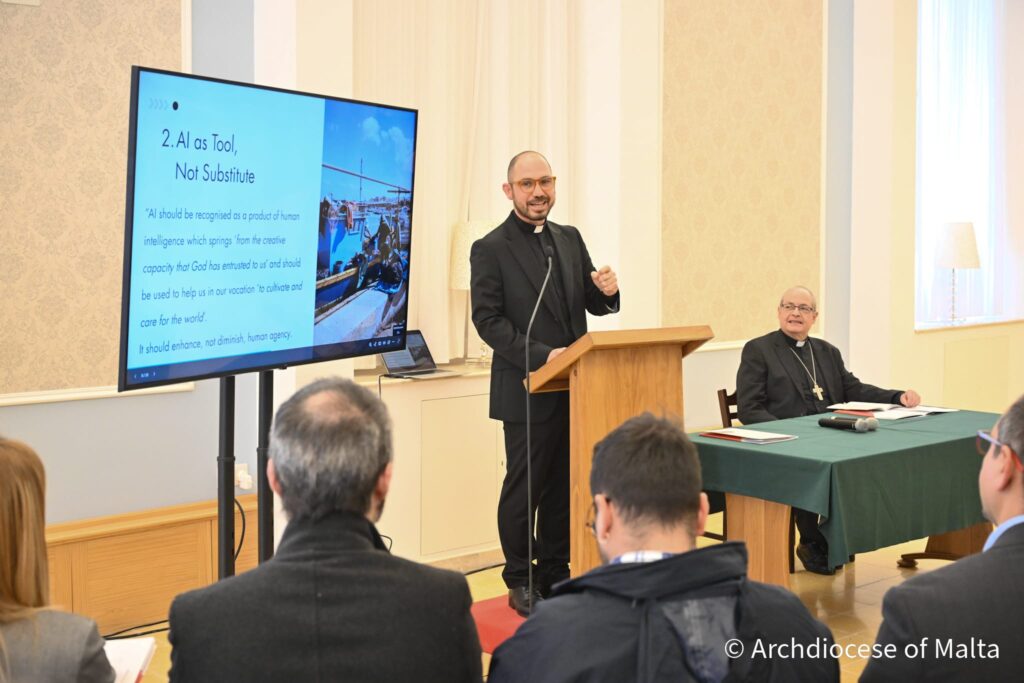
As well as delivering AI literacy and critical skill training to over 1,500 educators across Church, Independent and State schools, the Archdiocese is also providing expert consultation and training to vital professional sectors, and has been collaborating directly with the Malta Digital Innovation Authority (MDIA) to formulate literacy sessions for parents and vulnerable groups.
Recognising the significant benefits that technological advancements have brought to humanity, the Archdiocese is a willing collaborator in the ethical adoption of AI to enhance the wellbeing of society.
The Archdiocese invites all stakeholders to work together to ensure that AI remains at the service of people – supporting workers, protecting the vulnerable, enriching human creativity, and strengthening what it truly means to be human – while offering to collaborate with government, educators, businesses, and civil society on the way forward.
The full position paper may be viewed at church.mt/AOM-AI-policy.